The 4th Launch That Nearly Cost
a 31-Year-Old His Company (2008.09.28)
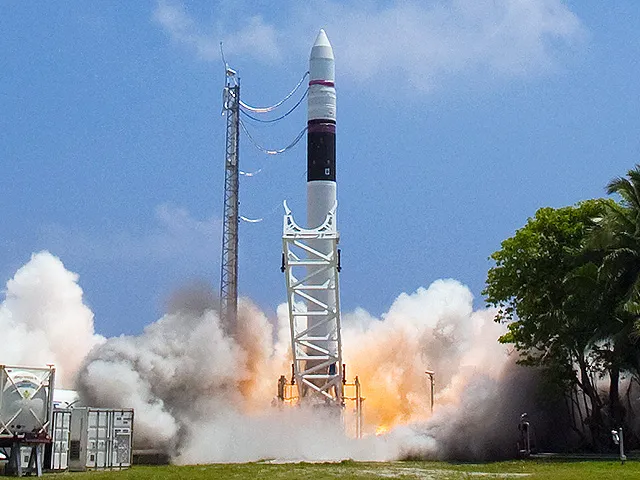
September 28, 2008, 4:15 PM (PDT). A tiny launch pad on Kwajalein Atoll in the Marshall Islands. SpaceX's Falcon 1, the 4th launch. The last gamble after three failures in a row. If this one blew up too — every asset 31-year-old Musk owned, Tesla included, was doomed to go down with it. Five minutes that evening moved the space industry from the hands of the state into the hands of individuals.
012002 — After 31-Year-Old Musk Sold PayPal
July 2002. A 31-year-old Elon Musk sold PayPal to eBay for $1.5 billion. His share was roughly $180 million. For most people, that's enough to live comfortably for the rest of your life. But Musk made two insane decisions instead:
- 2003 · Invested roughly $70 million to fund the founding of Tesla Motors (others ran it as CEO, but he became chairman and largest shareholder)
- May 2002 · Invested roughly $100 million to found SpaceX — with the stated mission of "making humanity a multiplanetary species"
Both companies pushed into fields that experts said were "100% guaranteed to fail." The last new automaker startup had been Chrysler, in 1925. And private rocket companies? Every one since the 1980s had a history of going under. Even ex-NASA engineers told Musk that "only nations can do spaceflight."
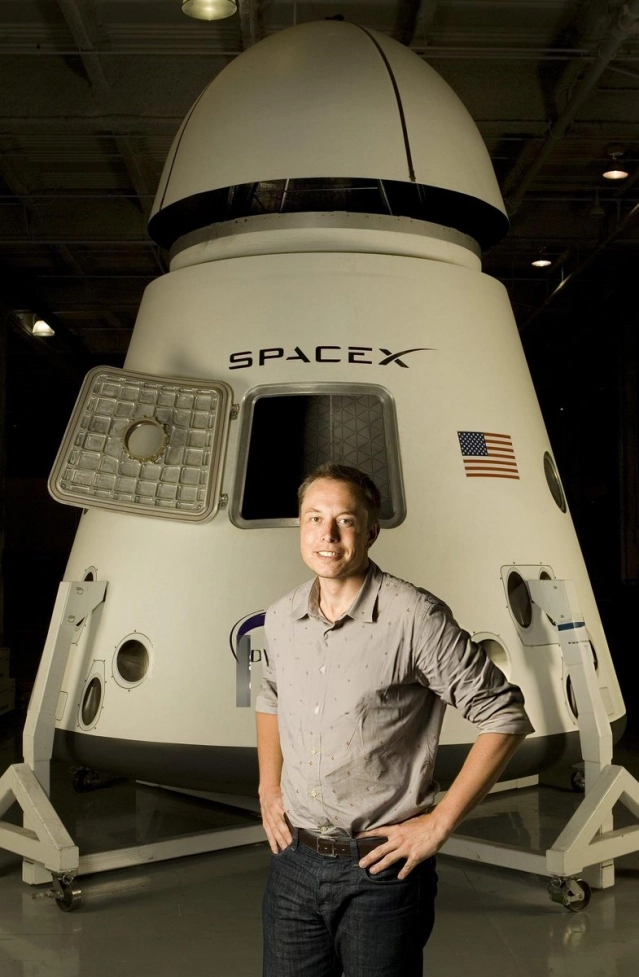
02Tom Mueller and the Pintle Injector — The Revival of a Technology NASA Abandoned
SpaceX's first key hire was Tom Mueller. A name you probably don't know — but in the space industry, he's a legend.
He grew up in a rural Idaho lumberjack family. As a kid, he built liquid-fueled rockets in his own garage (something you could still do in America back then). LMU (Loyola Marymount University), aerospace engineering → joined TRW. For 25 years, he built propulsion systems for missiles and nuclear submarines. In 2002, Musk called him directly — "Quit TRW, come to my company, and let's build humanity's first private ICBM."
What Mueller built was the Merlin engine. The core technology: the pintle injector. NASA had used it in the 1960s on the Apollo Lunar Module descent engine. But after that, NASA moved away from the more complex pintle design toward a more refined liquid engine (the showerhead-type injector). Mueller's reason for reaching back to the pintle: "It's simple, it's cheap, and if you design it well, it's reliable."
Pintle (Apollo LM, Merlin): One large central injection port. Simple. Even if one part is defective, the whole engine keeps running. 1/10th the manufacturing time. 1/20th the cost. The downside — slightly lower efficiency.
Mueller's insight: "In space, reliability and cost matter more than efficiency."
03Three Failures in a Row — 2006, 2007, 2008
SpaceX had aimed to launch for the first time in 2005. The actual first launch came on March 24, 2006, from Kwajalein in the Marshall Islands. Why there? Musk judged that "Cape Canaveral in Florida is too tightly controlled by NASA, which makes it expensive. A remote spot is cheaper." Kwajalein was a remote atoll the U.S. military had used for ICBM testing.
- Flight 1 (2006.03.24) — A first-stage engine fire 25 seconds after launch. Crashed and exploded. Cause: corrosion of a single fuel-line nut (in the salt-laden environment)
- Flight 2 (2007.03.21) — Five minutes after launch, sloshing (fuel slosh) during first/second-stage separation caused attitude-control failure. Failed just short of orbital insertion
- Flight 3 (2008.08.03) — After first/second-stage separation, residual thrust caused the first stage to ram into the second stage. Explosion
SpaceX's cash position after three failures in a row: nearly zero. What Musk said in a meeting — "We can launch one more time." Tesla was running out of money in the same period. To save both companies, he even put up his own house as collateral.
04September 28, 2008 — The Last Shot
That day, the SpaceX staff gathered at the launch site in an almost religious mood. Musk was at the monitor back at the California headquarters. The launch countdown:
T-minus 10... 9... 8... ignition. September 28, 16:15 PDT. Falcon 1 Flight 4 — for the first time — achieved first-stage separation, second-stage ignition, and orbital insertion, all of it. 9 minutes and 31 seconds later, the payload RatSat (a dummy satellite) reached Earth orbit.
— SpaceX Falcon 1 Flight 4 telemetry, 2008.09.28This was the first time in human history that a liquid-fueled rocket built with private capital reached orbit. Until then, every orbital insertion had been done by the United States, the Soviet Union/Russia, Europe's ESA, China, Japan, India. All of them governments. SpaceX was the first private company to pull it off — for a few million dollars.
05That Day, NASA Made a Strange Phone Call
Just days after the successful launch, NASA announced a $1.6 billion ISS cargo-resupply contract (COTS) with SpaceX. This is what saved Musk's company. It's not that NASA cleverly came to Musk's rescue. After the Columbia disaster (EP07), NASA had decided to retire the Shuttle, and it desperately needed a new way to ship cargo to the ISS.
So — the Columbia tragedy of EP07 → saved SpaceX. That's how all the beats of this series connect. The Shuttle's failure → NASA leaning on the private sector → SpaceX surviving.
As Musk himself put it later: "If Falcon 1 had failed on September 28, or if the NASA contract hadn't come through, or if Daimler hadn't decided on December 23 — Tesla and SpaceX would both have been finished. All three of those things depended on each other."
06Bezos's Different Path in the Same Era — Blue Origin
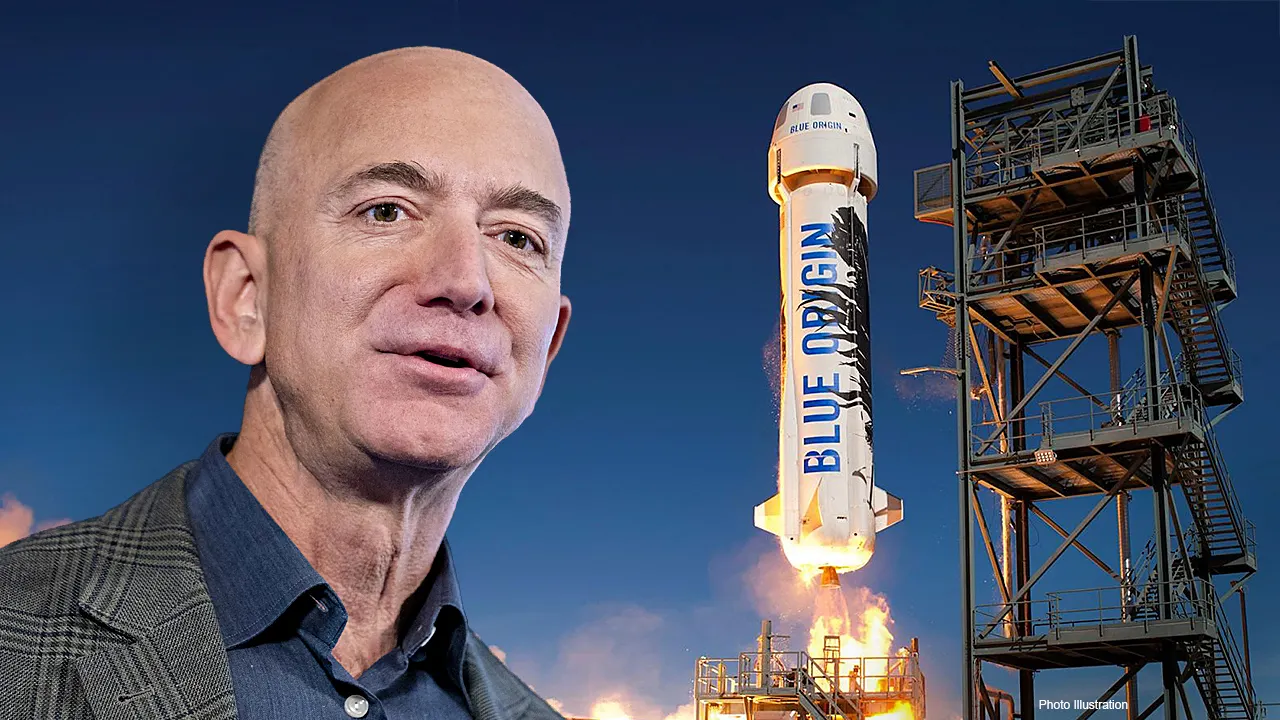
Around the same time Musk started SpaceX, another internet billionaire started a space company. Jeff Bezos's Blue Origin (founded September 2000). Started a year and eight months earlier than Musk's SpaceX.
But the two companies' strategies were polar opposites:
- SpaceX (Musk): Build fast, launch fast, learn even from the explosions. The space version of "Move fast, break things." Aimed at an orbital-class rocket from the very start
- Blue Origin (Bezos): Build slowly and precisely. The motto "Gradatim Ferociter" (Latin for "step by step, ferociously"). For its first 15 years, it attempted only ballistic (suborbital) flight. Its first orbital launch attempt was New Glenn in 2019, 19 years after the company's founding
As of 2008, Bezos's Blue Origin was a company almost nobody had heard of. About 50 employees. Its first New Shepard test flight was in 2011. In the meantime, Musk steadily pushed on through Falcon 9 → Dragon → reusable rockets. As a result, SpaceX pulled far ahead of Blue Origin.
07Why 2008 Is the Real Turning Point of the Space Age
Anyone who has followed this series since EP01 will know. For the 51 years from Sputnik in 1957 to 2008, space launch was the business of governments. NASA, Roscosmos, ESA, CNSA (China), JAXA, ISRO. All governments.
September 28, 2008 — Falcon 1 Flight 4 broke that 51-year balance. Here's what happened over the following 18 years:
- 2010 · For its post-Shuttle crewed spacecraft, NASA — instead of developing one in-house — put it out to bid to SpaceX and Boeing. A fundamental shift in the U.S. space industry
- 2012 · SpaceX's Dragon docked with the ISS for the first time. The first time a private company communicated directly with the ISS
- 2015 · Falcon 9's first first-stage landing (covered in detail in EP10)
- 2020 · SpaceX's Crew Dragon flew America's first private crewed mission. The U.S. regained crewed spaceflight capability for the first time in 9 years, since the Shuttle's 2011 retirement
- As of 2026 · Every U.S. flight to the ISS is on SpaceX. About 80% of all launches across the entire space industry are Falcon 9, Falcon Heavy, or Starship
All of this — had it exploded on September 28, 2008 — would have made for a completely different history of space. As Musk has often said since: "The scariest 5 minutes of my life were the last 5 minutes of Falcon 1 Flight 4."
In the next installment (EP10, the finale), we'll cover December 21, 2015, the day a rocket returned to the launch pad for the first time. And the reusability revolution of the 11 years that followed — when launch costs fell from $20,000/kg to $1,500/kg. And finally, the next Moon landing that Artemis will bring in 2026. It's the conclusion of the series.