The Man Who Dropped Bombs on London
Sent Humanity to the Moon
September 8, 1944, Chiswick, London. With no siren and no roar of engines, a single V-2 fell out of the sky. Three people died. The 32-year-old SS officer who built that rocket would — 25 years later — design the Saturn V that carried humanity to the Moon. One man, two lives, and the vast moral shadow that lies between them.
01September 8, 1944 — Chiswick, London
6:43 in the evening. Chiswick, a quiet neighborhood in west London. No siren sounded. No aircraft engine droned. Out of the sky, just — BOOM. A single explosion tore the street apart. Three people died, twenty-two were wounded.
That was the first ballistic missile strike in human history. It came down at four times the speed of sound, so there was no sound at all before impact. From that day on, for seven months, 3,172 V-2 rockets fell on London and Antwerp. Roughly 9,000 civilians were killed.
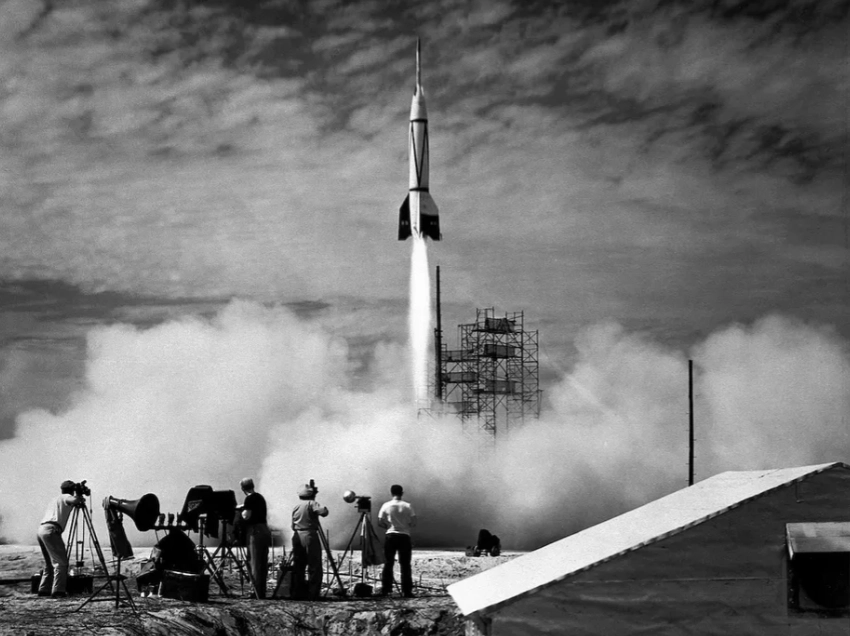
But there's one truth that people only learned much later. The V-2 was the only weapon in human history to kill more people in its making than in its use. We'll come back to that part.
02The Dream Came First — Von Braun at 13
When he was 13, his mother gave him a telescope. That was the start. At 16 he read Hermann Oberth's "The Rocket into Planetary Space" (1923) and was utterly hooked. At 18 he joined the Spaceflight Society (VfR) in Berlin and began building rockets himself. His dream was not bombs. It was Mars.
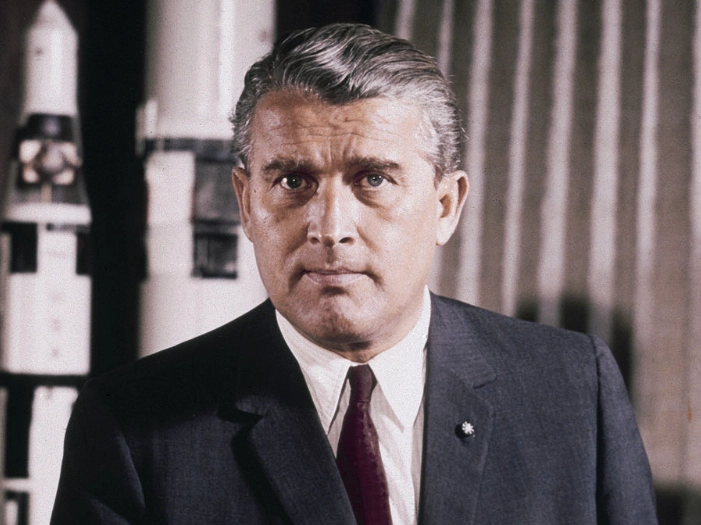
But this was 1932. Germany, defeated in the First World War, was in ruins, and the Treaty of Versailles had even blocked weapons research. There was exactly one place willing to fund rocket research — the German Army. On the surface it was "civilian research," but everyone knew the truth. They were going to build missiles.
At 20, von Braun accepted the offer. As he later put it in his memoirs — "I thought that was the road to the stars." Whether that was sincere or self-justification — opinions are still divided to this day.
03The Young Man Who Made a Deal with the Devil (1932-1940)
Over the next eight years, von Braun's résumé was — not that of a young man who dreamed of space:
- 1932 · Joins the German Army Ordnance Office (under Walter Dornberger)
- 1934 · PhD from the University of Berlin (age 22)
- 1937 · Joins the Nazi Party
- 1937 · Appointed technical director of the Peenemünde rocket research center (age 25)
- May 1, 1940 · Joins the SS (Schutzstaffel)
- 1943 · Promoted to SS Sturmbannführer (equivalent to major)
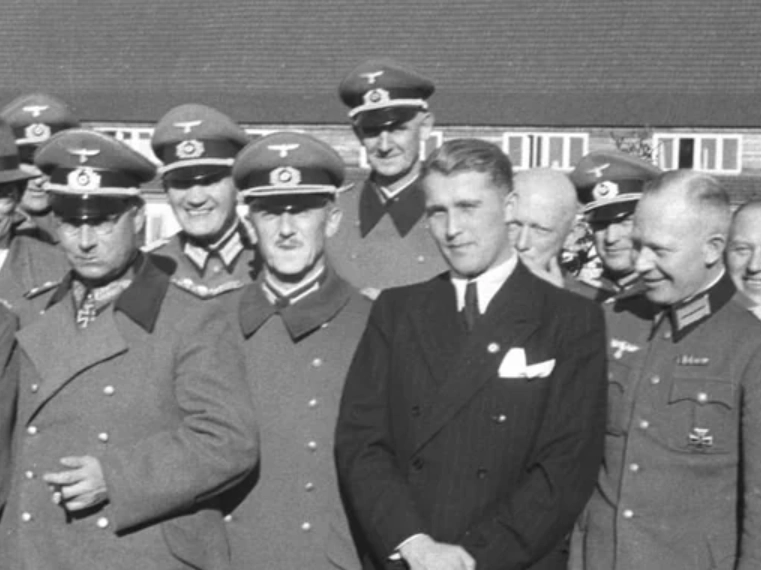
After the war, von Braun consistently maintained — "Joining the SS was forced. There was no choice if I wanted to keep working." But as historians dug through the archives, what came to light was — among other scientists in comparable positions, some never joined the SS at all. And there are dozens of letters in which von Braun routinely signed "Heil Hitler" on SS letterhead.
04The First Man-Made Object to Reach Space — The V-2
October 3, 1942, Peenemünde. The A-4 rocket (later renamed the V-2) was launched successfully for the first time. Altitude 84.5 km, range 190 km. What Dornberger said that day:
"Today, the era of spaceflight has begun."
— Walter Dornberger, Peenemünde, 1942.10.03 (right after the V-2's first success)By 1944 standards, the V-2's specifications were — completely insane. Hard to believe something like this came out of the 1940s:
- 12.5 m tall, 12,500 kg fully fueled
- Liquid propellant — alcohol + liquid oxygen
- Inertial guidance (gyroscope-based) — striking a target 320 km away in an age with no GPS
- Top speed of Mach 4 (four times the speed of sound)
- Operational peak altitude of about 88 km
And then, on June 20, 1944 — a V-2 test-fired at Peenemünde (MW 18014) reached an altitude of 174.6 km. What that means is — the first time a man-made object crossed the Kármán line (100 km altitude, the boundary of space). In other words, the V-2 was humanity's first artifact to reach space. A bomb, granted, but still.
05The Rocket Slaves Built — the True Cost of Mittelwerk
Dawn, August 17, 1943. 596 British RAF bombers struck Peenemünde (codename "Hydra"). Hundreds died. The tragedy is that most of them were forced-labor prisoners.
So the V-2 production facility was — moved underground. A secret cavern complex inside the Kohnstein mountain: Mittelwerk. And the place that supplied the labor for it was — the Dora-Mittelbau concentration camp. A subcamp of Buchenwald.
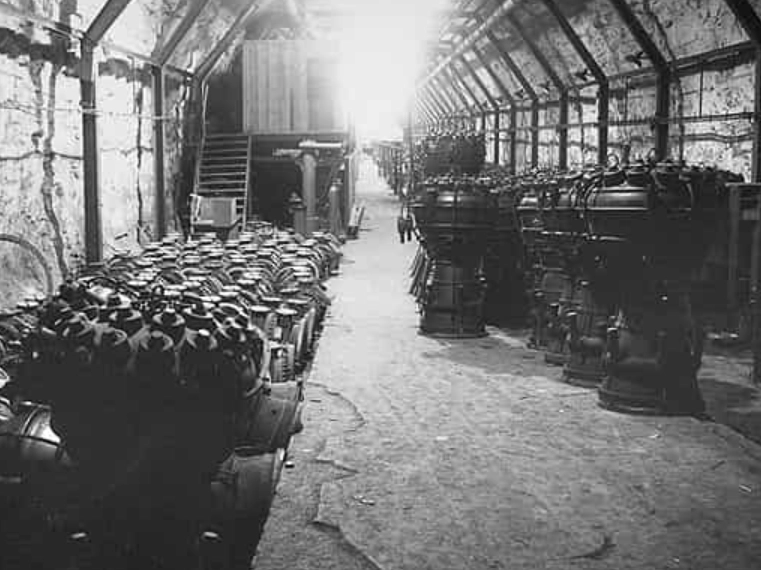
- About 60,000 prisoners passed through Dora
- About 20,000 of them died — disease, starvation, beatings, executions, overwork
- 12-hour shifts, inside tunnels without a single ray of sunlight
- Those suspected of "sabotage" were hanged from the ceiling cranes — in front of their fellow prisoners
- About 5,000–6,000 V-2s were produced. Which works out to roughly 4 prisoners dead per rocket
Here is the V-2's brutal arithmetic. About 9,000 civilians were killed by V-2 attacks. But about 20,000 slave laborers died building the V-2. In other words — the V-2 became the first weapon in human history to be a "weapon that killed more people in its making than in its use."
Von Braun visited Mittelwerk on several occasions. After the war he said it was "horrible, and impossible to stop." But the documents declassified from the 1980s onward revealed — letters in which he singled out specific technicians by name from the Buchenwald prisoner roster and requested them. Knowing their fate.
06The Day He Surrendered to the Americans on a Bicycle (1945.05)
April 1945. Berlin was collapsing. Von Braun gathered the roughly 500 members of Peenemünde's core team and — made the most important decision of his life. To which of the Allied powers would they surrender?
"We despise the French. We are mortally afraid of the Soviets. The British cannot afford to keep us. That leaves only the Americans."
— Wernher von Braun, April 1945 (from his postwar memoirs)On May 2, on a country road in the Bavarian Alps, von Braun's younger brother Magnus von Braun (then 26) rode a bicycle up to a checkpoint of the U.S. 44th Infantry Division. In broken English, what Magnus said:
"My name is Magnus von Braun. My brother invented the V-2. We want to surrender."
(My name is Magnus von Braun. My brother is the man who invented the V-2. We want to surrender.)
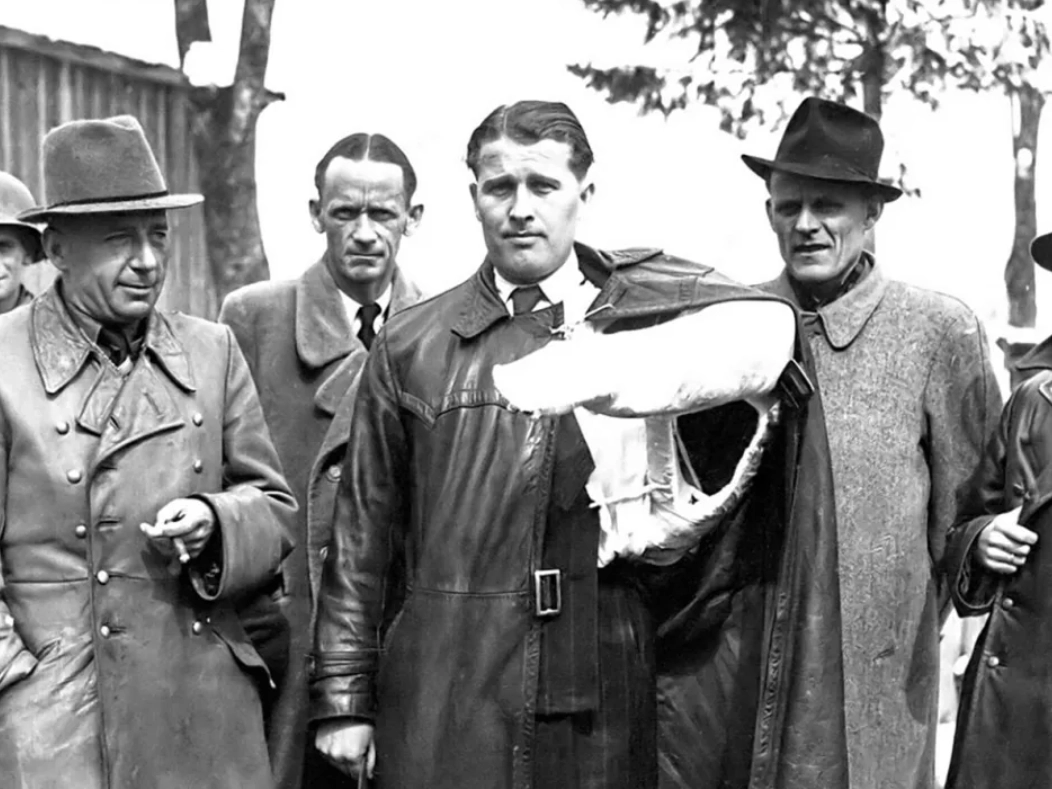
The American private at first thought the man was either crazy or a con artist. But he reported it up the chain, and within hours von Braun (his left arm in a cast — from a car accident days earlier) and his entire core team were in American hands. One of the most important surrenders of the 20th century happened just like that.
07Operation Paperclip — 1,600 Nazi Scientists Come to America
The moment von Braun's team fell into their hands, U.S. intelligence realized — if this talent ends up in the Soviet Union, it's over. In July 1945, President Truman signed a secret order. It was first named "Operation Overcast," then renamed "Operation Paperclip" in 1946 (because a paperclip was attached to the personnel files to mark them).
The stated justification: "It's better to have these people with us than in Stalin's hands."
What it actually did: laundered the war-crime records and brought 1,600 German scientists (plus their families) to the United States and gave them jobs. On the list:
- Wernher von Braun — head of the V-2 → later director of NASA Marshall
- Arthur Rudolph — V-2 production director at Mittelwerk (★ in 1984, after the U.S. Department of Justice confirmed his record at Mittelwerk, he gave up his American citizenship and was deported back to Germany)
- Kurt Debus — later the first director of NASA's Kennedy Space Center (KSC)
- Hubertus Strughold — "father of space medicine" (suspected of involvement in human experiments at the Dachau concentration camp)
- ...and about 1,600 others
08Disney's Friend Built the Saturn V (1955-1969)
The arc of von Braun's team in America from 1945 to 1969 was — almost a movie:
- 1945-50 · Fort Bliss, Texas / White Sands, New Mexico. Test-firing captured V-2s for the U.S. Army. Effectively under house arrest, but — the work went on.
- 1950 · Relocated to Redstone Arsenal in Huntsville, Alabama. The path to becoming real American citizens opened up.
- 1955 · Obtained U.S. citizenship. Appeared in Walt Disney's "Tomorrowland" series. On ABC primetime TV, von Braun explained space travel. The man who, 10 years earlier, had been dropping V-2s on London — became a hero to American children.
- 1958 · NASA is founded. Von Braun's team became the heart of the NASA Marshall Space Flight Center.
- 1960 · Von Braun is appointed the first director of NASA Marshall (age 48).
- July 16, 1969 · The Saturn V rocket he designed sent Apollo 11 to the Moon. Humanity set foot on another celestial body.
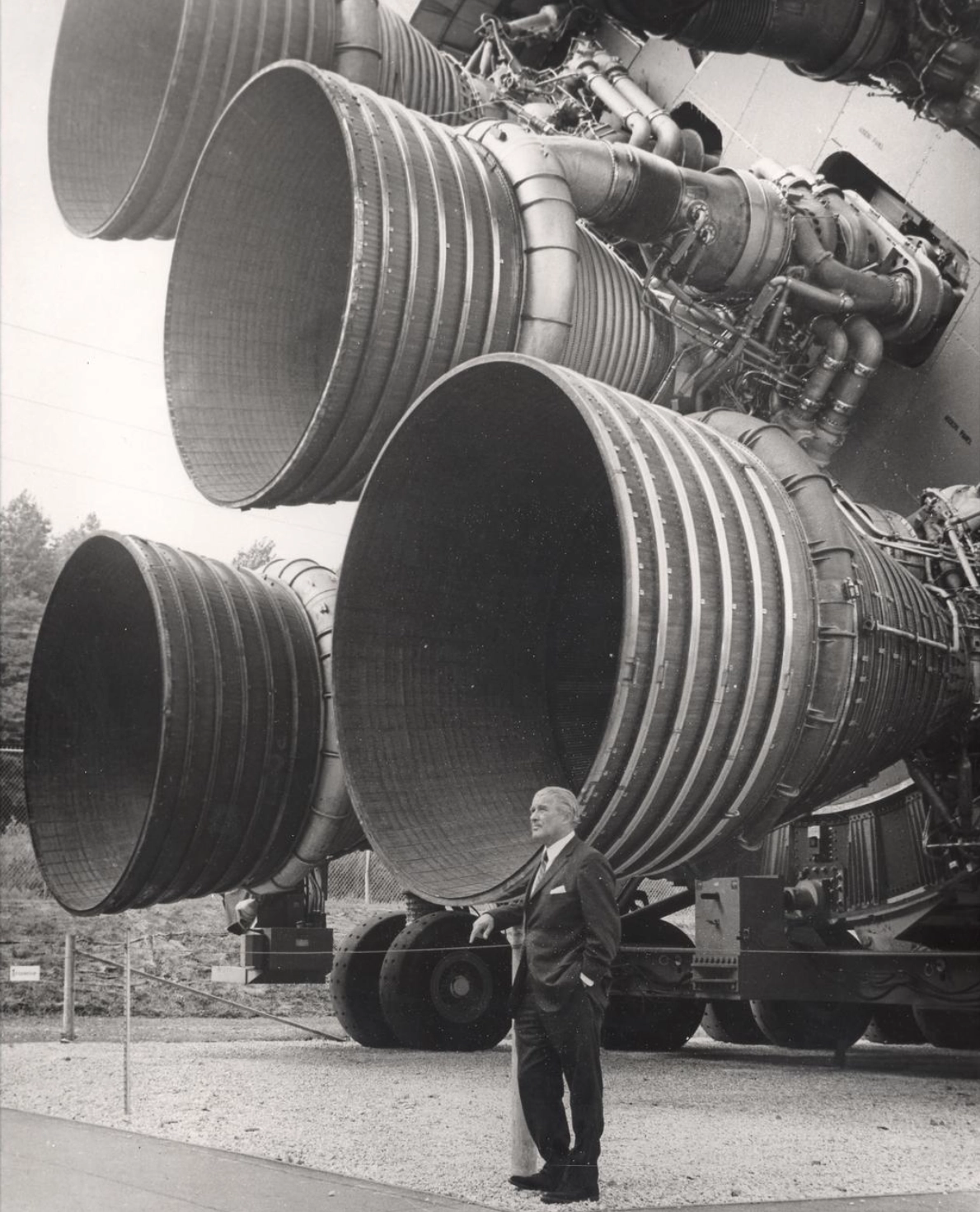
"'Once the rockets are up, who cares where they come down? That's not my department,' says Wernher von Braun."
(Once the rockets go up, who cares where they come down? That's not my department, says von Braun.)
09So How Should We Remember Him
Von Braun died of pancreatic cancer on June 16, 1977, at the age of 65. When he died, he was — an American hero. The father of the Saturn V. A symbol of NASA.
Then, as the secret documents were released, the picture grew steadily darker. Arthur Rudolph's deportation in 1984, the testimony of Dora survivors in the 1990s, the academic research of the 2000s. What we now know:
- Von Braun clearly visited Mittelwerk many times — contradicting his statement that he had "never seen it firsthand"
- He was present at the site of executions on at least one occasion (survivor testimony + SS records)
- Letters in which he personally requested specific technicians from concentration-camp rosters — knowing their fate
- Circumstantial evidence that his promotion to SS Sturmbannführer was — not coerced, but the result of his own active request
Even so, the fact that the Saturn V he built carried humanity to the Moon does not vanish. Both of these are true at the same time. That he is the man who built the V-2 with slave labor, and the man who sent humanity to another celestial body.
That is the starting point of the space age. Not a morally clean hero's tale — but the story of how human beings, amid ambition and fear and rationalization, forged the road to the stars.
In the next installment (EP02) — we cover the story of the 90 minutes on October 4, 1957, when an 83.6 kg aluminum sphere threw America into a panic. And the story of the secret Soviet genius who put that sphere up there — a man who survived six years in the gulag, and whose identity remained a top-secret KGB matter until the day he died — Sergei Korolev.