A Journey of Two Siblings,
Different Paths to the Same Decision
One followed physics and neuroscience to the frontier of AI research. The other grew up between global health and operations. It took the two of them about fifteen years to sit back down in the same room. This is the story of Dario and Daniela Amodei.
A single family photograph
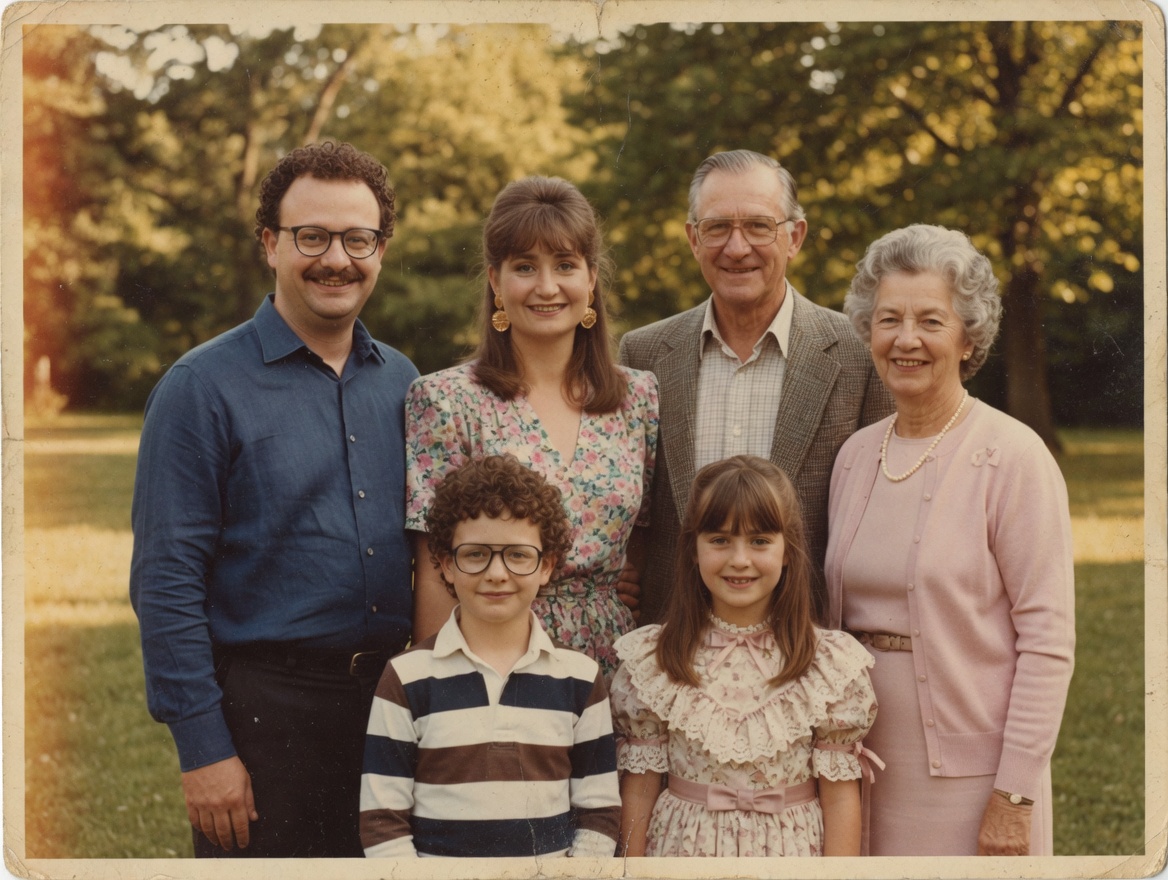
I want to start the story from this single photograph. Front row, left, the curly-haired boy with glasses is Dario. He must be seven or eight. Next to him, the small girl with carefully tied hair is Daniela, around five. Behind them stand parents and grandparents, everyone dressed neatly. Maybe it was someone's birthday, or perhaps a family gathering for a holiday.
On the day this photograph was taken, neither of the two could have foreseen what would come. Not even the adults closest to them. That these two siblings would one day build a company together. That the company would become one of the most influential AI companies in the world. And yet something is already visible in the picture. Dario's gaze is fixed somewhere beyond the camera. Daniela next to him wears a faintly grown-up smile. The way the two of them lean toward each other reads as natural, almost effortless.
This essay is about the different paths those two small children walked. It is also about how those different paths ended up converging in a single room. One family, two journeys, and in the end, one company.
In an Italian-American household
The surname Amodei comes from Italy. Their father, Riccardo Amodei, was Italian by origin, a craftsman who worked with leather. Even after moving to the United States, his hands stayed on the same kind of work, the slow craft of making things by hand. Their mother, Elena Engel, grew up in America and worked in a field tied to books. One read the grain of leather; the other read the grain of sentences. The grain of the hand and the grain of writing met in one household.
The couple settled in San Francisco. Dario was born in 1983, and Daniela followed about four years later. There was a meaningful gap in age, but the bond between the siblings was close. Daniela has recalled, in one interview, how her older brother read books to her or sat with her solving math problems when she was small. The household leaned scholarly. Their parents told the two children to take interest in anything, and then to go deep with it. Curiosity, in that household, was a form of love.
One thing is worth noting. Both children, from an early age, kept drifting toward the same question: how can one actually help people. Dario at first wanted to become a doctor. He imagined understanding the workings of the nervous system, and through that understanding, healing illness. Daniela was drawn early to global health. The roads the two of them would later take look very different on the surface, but the question at the root was a single one. How can one do work that genuinely helps human beings, and do it better.
Dario's path — from physics, to the brain, to AI
Dario first leaned toward medicine. But as he grew, his attention kept moving inward. From the body to the brain itself, then from the brain to the principles by which it works. In high school he was absorbed by physics and mathematics. He wanted to understand nature at its most basic unit, and that desire pulled him in that direction. When he entered Princeton, he chose physics as his major.
Just before graduating, Dario arrived at a realization. Physics was powerful at explaining the universe. But what he most wanted to know was not the universe itself; it was the human mind that perceives the universe. How does a clump of gray neurons produce the phenomenon we call consciousness. How can one person love another. How can certain sentences move us. Physics could not easily answer those questions. So he made his next decision.
Dario went to Stanford for graduate school. His field was computational neuroscience. He studied a part of the brain called the visual cortex. From the moment light hits the retina to the moment we become aware of seeing something, what computations happen in between. Working out, in math and simulation, how neurons process information.
After finishing his PhD, he spent some time at Princeton as a postdoctoral researcher. His gaze, however, was already turning elsewhere. The early 2010s. Deep learning was just rising. The computational structure called the neural network, inspired by the human brain, was suddenly producing remarkable results in image recognition and speech processing. What Dario had spent more than a decade studying, the brain's way of processing information, was rapidly merging with industry.
He made his decision. He left academia for industry. His first stop was the Silicon Valley AI lab of the Chinese search company Baidu, where he worked on speech recognition. The next was Google Brain, and then in 2016 he moved to OpenAI. At the time, OpenAI had not yet existed for a full year, a small nonprofit research organization. Dario became one of the company's early researchers. Over time he became Research Director, and eventually Research VP. GPT-2 and GPT-3 were both built during the period when he was the principal in charge.
Daniela's path — between people and systems
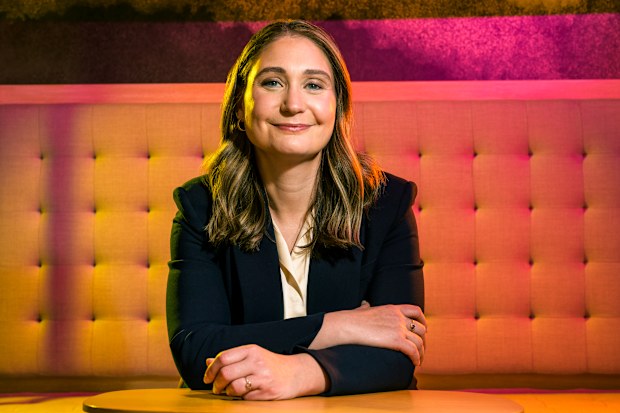
Daniela took a different path from her brother. From the start she was interested in the place where people and systems meet. She studied global health at UCSF (University of California, San Francisco). What pulled her was less the academic inquiry itself and more the question of how good intentions actually get to work in practice. Even with good policy and good ideas, what reaches the ground requires the invisible skeleton called operations. She recognized that early.
After school she worked at a nonprofit in the health sector, focused on health systems in developing countries. She learned something there. Good intentions are only the starting line. Between the intention and the actual person it tries to reach, there are countless small decisions and systems. That recognition would become a decisive asset when she made her next move.
For a time she worked on political campaigns. Then, in the mid-2010s, she joined the rapidly growing payments-infrastructure company Stripe. Stripe's stated mission was to turn payment processing into "simple infrastructure." Daniela led hiring, operations, and people-related work there. She watched, from up close, a company grow from dozens to thousands of employees. She faced the same question every day. How does a fast-growing company avoid losing itself along the way.
In 2018, Daniela moved to OpenAI. Her first title was head of people and operations. Soon she was elevated to VP of Safety and Policy. She was not merely a head of HR. It was the seat that designs the backbone for how a company building technology with society-wide impact like AI is run responsibly. Her arrival at OpenAI in 2018 was not coincidental in timing. It came about two years after her brother Dario had moved there. The two of them, for the first time, were working at the same company.
At OpenAI, inside the same room
The two of them began working at the same company in 2018. By then Dario had already passed through Research Director and was at the Research VP seat. He was responsible for the core research of the GPT series, and the company's safety research group reported up through him as well. Daniela ran operations and the safety policy office. The work the two of them did was not coincidentally adjacent. From the start, their roles were deeply interlocked.
From the outside, that period at OpenAI looked dazzling. Early 2019, GPT-2 provoked a public debate. The company first held back the release, citing "too dangerous," then released it in stages. The next May, GPT-3 shook the world. From inside the company, however, in the view the two of them saw up close, tension was building. The company needed more capital, so it shifted from nonprofit to capped-profit. A deep partnership with Microsoft began. The pace of releases started to outrun the pace of safety research.
What conversations the two of them had during this period has never been made public. The outcome, however, is clear. On a day in December 2020, the two of them turned in their resignations on the same day. The older sibling from the head-of-research seat, the younger from the head of safety and policy. Within days, the five researchers they trusted most followed the same decision.
One thing is clear. The two did not decide separately. They decided together. What was decisive at that moment was familial trust. The kind of deep conversation, the speed of decision-making, the willingness to share the risk, none of those are easy for business colleagues alone. They were possible because the two were siblings. "Building a company with my sister is like taking out the largest insurance policy on trust that exists." Dario said something close to that in a later interview.
CEO and President — the balance of roles
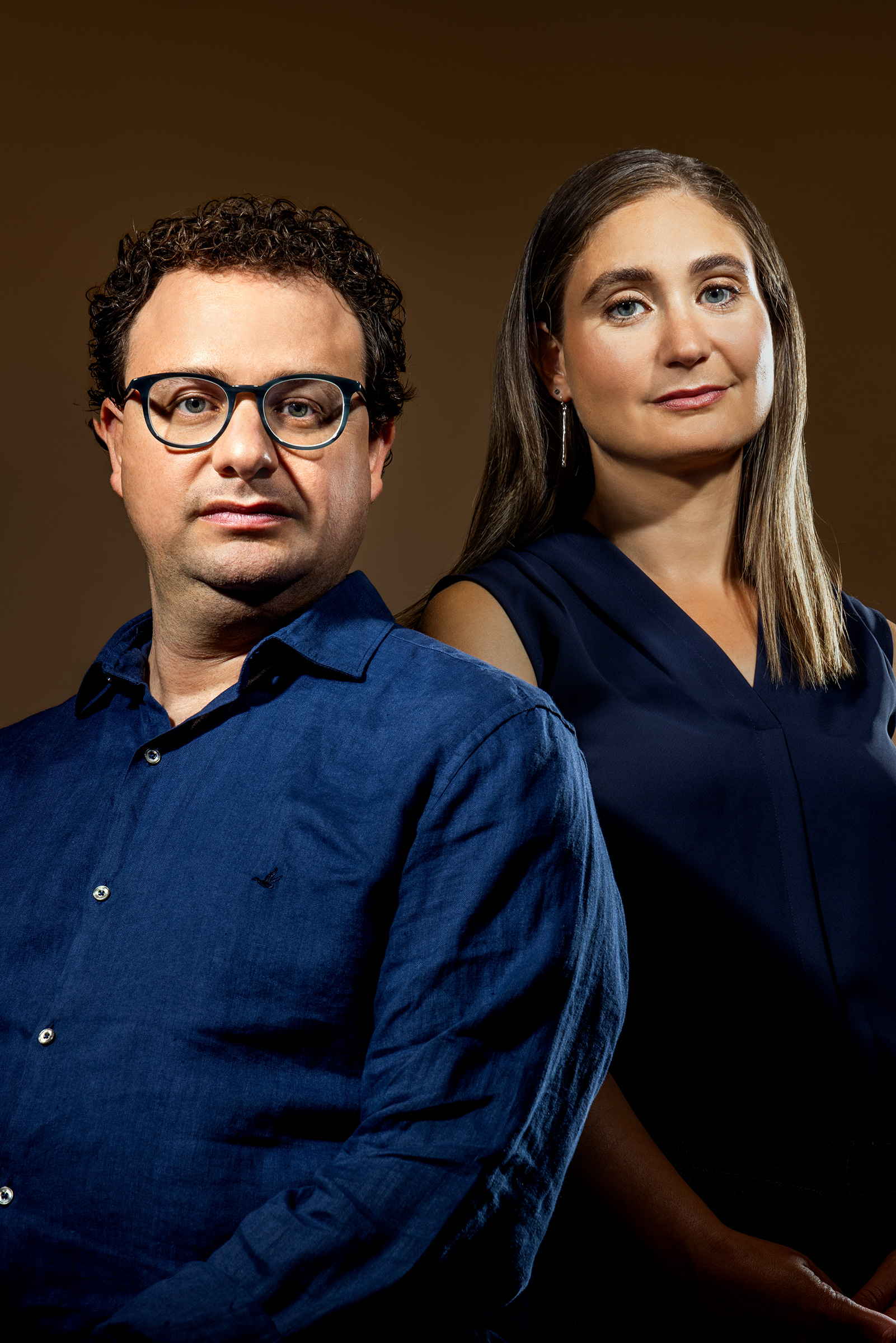
Inside Anthropic, the two roles are clearly split. Dario, as CEO, oversees the company's technical direction. He decides which models to build, which safety standards to set, where to allocate research resources. He also plays the company's public-facing role. Policy debates around AI safety, congressional hearings, major media interviews, Dario is the one who shows up to those. He is known as a person who speaks calmly and carefully. In public statements he has almost never directly criticized OpenAI, and he is equally unguarded about admitting his own company's limitations.
Daniela, as President, is responsible for the company's everyday existence. Hiring, people, operations, policy, governance, finance. Every facet of the company's daily rotation belongs to her. This is an era where AI companies double in size every year or so. Anthropic grew from thirty people in 2021 to around a thousand by 2026. Growing at that pace while keeping the company's identity intact is by no means easy. That is Daniela's job.
Their partnership rests on a clear division of roles. Dario handles research and external communication; Daniela handles operations and internal culture. The two domains, however, are not separate. Building safe AI does not end with building good algorithms. It also includes building a company that can run those algorithms responsibly. Algorithm and operation, research and policy, the two domains are sides of the same coin. The siblings' relationship binds the two sides naturally.
The road back to the same path
We started from a single family photograph. The curly-haired boy and the small girl with neatly tied hair, both in the front row. About forty years have passed since then. One moved from physics to neuroscience to AI. The other moved from health to operations to safety and policy. On the surface, the two paths look very different.
And yet, looked at closely, the two of them were asking the same question from the start, only with different tools. How can one do work that genuinely helps human beings, and do it better. Dario approached that question with the tools of neuroscience and AI. Daniela approached it with the tools of operations and systems. The two sets of tools eventually met in the same place. Building safe AI and running it responsibly required both.
On that January day in 2021, when seven people gathered in someone's borrowed living room, the fact that the two of them were sitting next to each other carried no small meaning. There was a kind of trust in that room that no business partner and no academic colleague could substitute for. There was a principle their parents had taught them: take whatever you do seriously. That principle was now becoming the foundation of the company they had built.
In the next chapter we turn to their first product, Claude. From Claude 1.0 to 4.7, how the AI model evolved. How Anthropic built it in a way different from the other companies. And perhaps you, reading this, have met Claude at one of those points along the way.
One family, two paths, one company. The story of a model that the company built unfolds in the next chapter.
References · Sources
- Lex Fridman Podcast #452, "Dario Amodei: Anthropic CEO on Claude, AGI & the Future of AI" (2024.11)
- Fortune, "Daniela Amodei: The Operator Behind Anthropic's Rise" (2024.06)
- The Information, "Daniela Amodei on Building Anthropic's People Function" (2024.02)
- Forbes, "Inside Anthropic, the Top AI Safety Lab" (2023.07)
- TIME 100 Most Influential People in AI: Dario Amodei (2023.09)
- Wired, "Anthropic's Co-Founders on Building Safer AI" (2024.03)
- Anthropic.com official "About Us" page, founders section
- Stanford University CS Department alumni listing — Dario Amodei (PhD, Computational Neuroscience)